

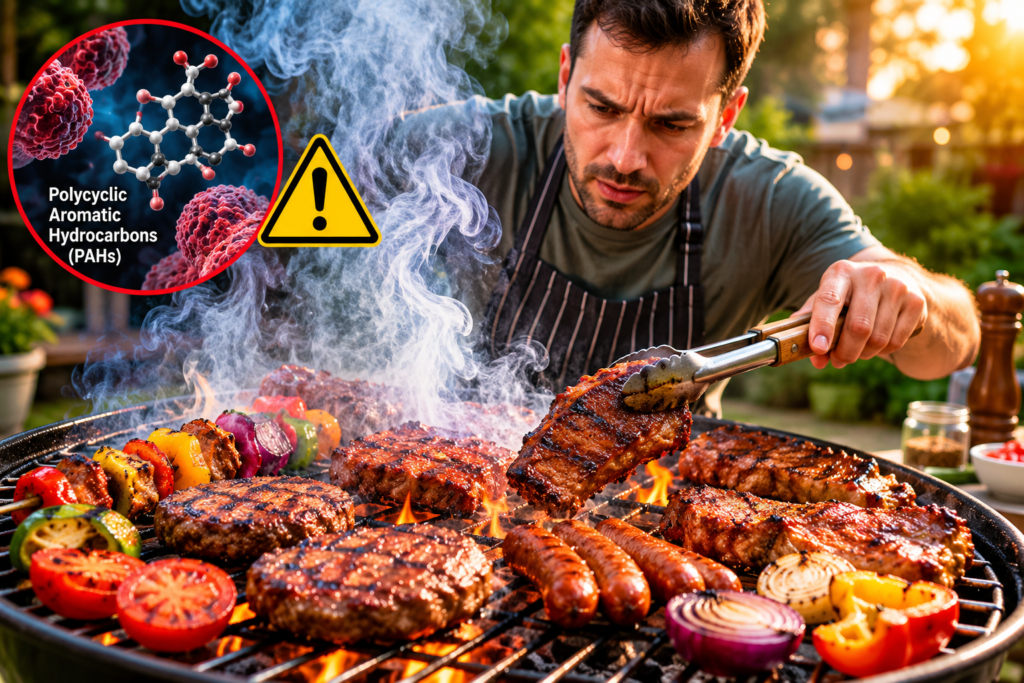
The discussion around PAH Food Chemicals is growing after scientists highlighted the presence of potentially harmful compounds in many commonly consumed foods. While most people focus on calories, sugar, fats, and protein, researchers say there may be another factor worth paying attention to: chemicals that form during high-temperature cooking.
Scientists studying food safety recently warned about polycyclic aromatic hydrocarbons (PAHs), a group of compounds that can develop when foods are grilled, smoked, roasted, fried, or exposed to intense heat. Some PAHs have been linked to cancer risks, making them an important area of ongoing research.
The findings have raised concerns because these compounds may appear in foods that many people eat regularly.
What Are PAH Food Chemicals?
PAHs, short for polycyclic aromatic hydrocarbons, are chemicals formed when organic materials burn incompletely. According to public health experts, PAHs can develop from:- Burning wood
- Oil combustion
- Coal burning
- Tobacco smoke
- High-temperature cooking processes
- Charbroiled foods
Why Scientists Are Concerned About PAHs: PAH Food Chemicals
Researchers have studied PAHs for years because some compounds within this group are known for their carcinogenic potential. According to food safety experts, prolonged exposure to high levels of certain PAHs may damage DNA, increasing the possibility of cancer development over time.Cancer Risk Remains the Biggest Concern
Scientists emphasize that cancer risk depends on several factors, including:- Amount of exposure
- Duration of exposure
- Overall health
- Lifestyle choices
- Environmental conditions
The New Food Safety Research Explained: PAH Food Chemicals
Researchers from the Seoul National University of Science and Technology recently developed a faster food safety testing method to identify PAHs in food products. The study focused on improving detection methods while examining PAH contamination in commonly consumed foods.Scientists Tested Multiple Food Categories
The research analyzed several foods that may contain elevated PAH levels. According to the findings, the highest PAH concentrations were found in:- Soybean oil
- Duck meat
- Canola oil
How PAHs Form During Cooking: PAH Food Chemicals
Many people assume food contamination only comes from artificial additives. However, PAHs can develop naturally during certain cooking methods. According to researchers, one major source occurs when fat and juices from meat drip onto hot cooking surfaces or open flames. This process creates smoke that carries PAHs back onto the food.High-Temperature Cooking Creates More Risk
Several cooking methods may increase PAH formation:- Charcoal grilling
- Smoking foods
- Roasting over open flames
- High-temperature frying
- Barbecuing meats
Common Foods That May Contain PAHs: PAH Food Chemicals
Many foods associated with PAHs are popular around the world. Scientists noted that PAHs may appear in:- Grilled burgers
- Smoked meats
- Overcooked bacon
- Burnt toast
- Processed meats
- Certain cooking oils
Oils Can Also Play a Role
The study attracted attention because oils ranked among the foods with the highest detected PAH levels. Researchers specifically highlighted:- Soybean oil
- Canola oil
Scientists Are Working on Better Detection Methods: PAH Food Chemicals
One reason the study gained attention is because detecting PAHs can be difficult. Traditional testing methods often require:- Long preparation times
- Large chemical use
- Extensive laboratory work
Food Safety Could Improve
Professor Joon Goo Lee from the Department of Food Science and Biotechnology said the research could help strengthen public health protection while reducing hazardous chemical use during testing procedures. Improved testing may help food safety authorities identify contamination more efficiently in the future.PAHs Are Not the Same as Acrylamide: PAH Food Chemicals
Many readers confuse PAHs with another food-related compound called acrylamide. Although both substances are associated with high-temperature cooking, they are different chemicals. According to cancer researchers, acrylamide forms mainly when starchy foods cook at very high temperatures. However, current evidence suggests normal dietary acrylamide exposure is unlikely to significantly increase cancer risk in humans. PAHs remain a separate area of concern because of stronger evidence connecting certain compounds to carcinogenic effects.Ways to Reduce Exposure to PAH Food Chemicals: PAH Food Chemicals
While complete avoidance may not be realistic, experts suggest several practical ways to lower exposure.Avoid Excessive Charring
Burnt food tends to contain higher levels of combustion-related compounds. Reducing heavy charring can help limit PAH formation.Use Moderate Cooking Temperatures
Cooking food thoroughly remains important, but extremely high temperatures may increase chemical formation. Balanced cooking methods often produce safer results.Limit Smoke Contact
Since smoke contributes to PAH contamination, reducing direct smoke exposure during cooking may help lower accumulation.Maintain Variety in Your Diet
Nutrition experts frequently recommend balanced diets that include:- Fruits
- Vegetables
- Whole grains
- Lean proteins
Why This Research Matters: PAH Food Chemicals
Food safety research continues evolving as scientists learn more about how cooking methods affect health. The latest findings do not suggest that people should panic about eating grilled foods. Instead, researchers want greater awareness regarding how certain cooking processes can create unwanted compounds. The study also highlights the importance of ongoing monitoring, improved food testing, and better understanding of long-term dietary exposure.Public Health Experts Continue Studying PAHs
Scientists still have many unanswered questions regarding dietary PAH exposure. Current research focuses on:- Long-term health effects
- Food contamination patterns
- Cooking methods
- Exposure reduction strategies
- Improved testing technologies
